

Health is one of the most common and important topics in IELTS Speaking. It appears across all parts of the test, from simple questions about daily habits in Speaking Part 1 to more abstract social issues such as public healthcare systems or mental wellbeing in Speaking Part 3.
However, many candidates struggle to speak effectively about this topic because they rely too heavily on basic words like healthy, sick, or unhealthy. To reach Band 8 or higher, you need to demonstrate a more flexible and natural use of topic-specific vocabulary, along with accurate collocations and native-like expressions, rather than memorising fixed answers.
In this article, you’ll learn Band 8+ IELTS Speaking vocabulary related to Health, clearly organised into common subtopics frequently tested in the exam. Each section is supported by practical sample answers, helping you apply these words and phrases naturally in your own IELTS Speaking responses.
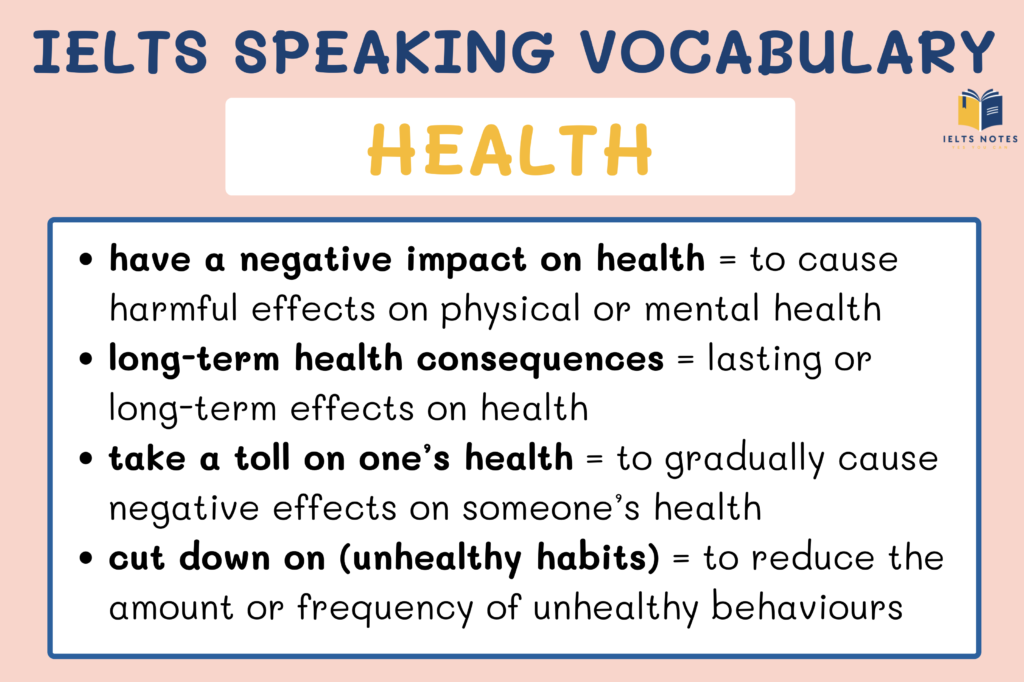
IELTS Speaking Health-Related Vocabulary
General Health Vocabulary
- health = the overall state of physical and mental wellness of a person
- well-being = a state of being healthy, comfortable, and satisfied both physically and mentally
- physical health = the condition of the body, including strength, fitness, and physical functioning
- mental health = a person’s emotional, psychological, and mental state
- lifestyle = daily habits and behaviours that directly influence health
- medical condition = a specific illness, disease, or health-related issue
- symptoms = signs or indications of an illness or health problem
- treatment = medical care or methods used to improve or cure a disease or condition
- medication = drugs or medicine taken to treat an illness or medical condition
- recovery = the process of returning to a healthy state after illness or injury
- immune system = the body’s defence system that protects against infections and diseases
- preventive care = healthcare practices aimed at reducing the risk of illness or disease
- overall fitness = the general level of physical health and strength of the body
- long-term health = health maintained over an extended period of time, not just short-term well-being
- quality of life = the overall standard of well-being, including health, comfort, and life satisfaction
Health Problems & Conditions Vocabulary
- illness = a general condition of being unwell or suffering from poor health
- disease = a specific medical condition, often serious or long-lasting
- chronic illness = a long-term health condition that is persistent and difficult to cure completely
- acute condition = a health problem that appears suddenly and is usually severe over a short period
- physical discomfort = a feeling of bodily pain, soreness, or physical unease
- mental health issue = a condition that affects a person’s psychological or emotional wellbeing
- stress-related problems = health issues that develop as a result of prolonged or excessive stress
- anxiety disorder = a mental health condition characterised by excessive worry that interferes with daily life
- depression = a long-lasting mental health condition marked by persistent sadness and loss of interest
- sleep deprivation = the condition of not getting enough sleep over an extended period
- fatigue = a state of constant tiredness that is not solely caused by physical activity
- weakened immune system = a reduced ability of the body to fight infections and illnesses
- lifestyle-related disease = a health condition linked to habits such as diet, physical activity, or daily routines
- obesity = a medical condition involving excessive body fat that negatively affects health
- cardiovascular disease = a group of disorders affecting the heart and circulatory system
- respiratory problems = health conditions related to breathing, the lungs, or airways
- chronic pain = persistent pain that lasts for a long time and is often difficult to treat fully
- mental exhaustion = a state of extreme psychological tiredness caused by prolonged pressure or stress
- burnout = a condition of physical and mental exhaustion resulting from excessive workload or long-term stress
- health complications = secondary health problems that arise as a result of another illness or condition
Read more
Healthcare & Medical System Vocabulary
- healthcare system = the organised structure through which medical care and health services are provided in a country or region
- public healthcare = a state-funded healthcare system managed and supported by the government
- private healthcare = a for-profit healthcare system operated by private organisations or individuals
- medical services = healthcare services such as medical examinations, treatment, and patient care
- access to healthcare = the ability of individuals to obtain medical services when needed
- health insurance = a form of insurance that helps cover the costs of medical treatment and healthcare services
- medical staff = healthcare workers such as doctors, nurses, and medical technicians
- healthcare professionals = trained specialists working in the medical and health sector
- hospital facilities = the buildings, equipment, and infrastructure available in hospitals
- primary healthcare = basic frontline medical care that serves as the first point of contact in the healthcare system
- specialised treatment = advanced medical care for complex or specific health conditions
- healthcare funding = financial resources allocated to support the healthcare system
- public health policy = government regulations and strategies designed to protect and improve public health
- preventive healthcare = medical care focused on preventing illness and reducing health risks
- medical resources = healthcare assets including personnel, equipment, and financial support
- healthcare inequality = unequal access to healthcare services among different social or economic groups
- overcrowded hospitals = a situation in which hospitals have more patients than they can effectively accommodate
- healthcare reform = changes made to improve the efficiency and effectiveness of the healthcare system
- quality of medical care = the standard of healthcare services and treatments provided to patients
- long-term healthcare planning = strategic planning aimed at ensuring sustainable healthcare provision in the future
Health-related Collocations
- maintain good health = to keep a good level of physical and mental health over a long period of time
- lead a healthy lifestyle = to follow a balanced and health-conscious way of living
- suffer from health problems = to experience or be affected by medical or health-related issues
- have a negative impact on health = to cause harmful effects on physical or mental health
- improve physical well-being = to enhance overall physical health and fitness
- mental well-being = a state of emotional balance, psychological stability, and positive mental health
- prevent serious illnesses = to reduce the risk of developing severe or long-term diseases
- cope with stress = to manage and deal effectively with stress or pressure
- develop unhealthy habits = to form behaviours that are harmful to one’s health
- make lifestyle changes = to modify daily habits in order to improve health and well-being
- health-related issues = problems or concerns connected to physical or mental health
- take responsibility for one’s health = to actively care for and manage one’s own health
- long-term health consequences = lasting or long-term effects on health
- access quality healthcare = to be able to obtain high-standard medical services
- promote public health = to encourage and improve the overall health of the population
Read more
Idioms & Natural Expressions about Health
- be in good shape = to be physically healthy and in good physical condition
- feel under the weather = to feel unwell, tired, or slightly ill
- run down = to feel exhausted or weakened due to prolonged stress or overwork
- back on one’s feet = to recover and regain normal health after an illness or injury
- at the peak of health = to be in one’s best possible state of health
- take a toll on one’s health = to gradually cause negative effects on someone’s health
- on the road to recovery = to be in the process of regaining health after illness or treatment
- burn the candle at both ends = to overwork or live in an unhealthy way, leading to exhaustion and health problems
- in poor health = to have a weak or unhealthy physical condition
- a clean bill of health = official confirmation that someone is in good health after a medical check-up
- feel physically drained = to feel completely lacking in physical energy
- in the best of health = to be in excellent physical condition
Phrasal Verbs Related to Health
- come down with (an illness) = to suddenly become ill, usually with a mild or short-term illness
- get over (an illness) = to fully recover after being sick
- suffer from (a condition) = to have or be affected by a particular health condition
- burn out = to become severely exhausted, both physically and mentally, often due to prolonged stress or overwork
- work out = to exercise in order to improve physical fitness and health
- cut down on (unhealthy habits) = to reduce the amount or frequency of unhealthy behaviours
- build up (strength / immunity) = to gradually increase physical strength or improve the immune system
- pass out = to lose consciousness, often due to fatigue or a health issue
- slow down = to reduce the pace of work or daily activities to protect one’s health
- wear oneself out = to make oneself extremely tired through excessive physical or mental activity
- pull through = to survive or recover from a serious illness or medical condition
- break down (physically or mentally) = to experience physical or mental collapse due to stress, illness, or exhaustion
- look after one’s health = to take care of and protect one’s own health
IELTS Speaking Part 1: Topic – Health
Do you have any unhealthy habits?
Yes, I do. I have a bad habit of staying up late, especially when I’m working or trying to finish something. I also tend to work for long periods without taking breaks, which isn’t great for my concentration or health.
In what ways do you try to stay healthy?
Well, to be honest, as a Gen Z, my daily routine can be quite irregular, especially when it comes to sleep. Recently, I’ve been trying to go to bed earlier and stick to a more consistent schedule, because I know it has a big impact on my overall health.
Do you do any sports?
Yes, I do, although not as much as I used to. When I was younger, I used to swim quite regularly, but now that I’m working full-time, it’s hard to keep that routine. These days, I go jogging twice a week.
Do you think more about your health now than when you were younger?
Yeah, I think so. When I was younger, I didn’t think much about my health at all. But as I’ve got older, I’ve started to pay more attention to it because I’ve noticed that some of my old habits had a negative impact on my health.
Useful Vocabulary:
- staying up late = going to bed much later than usual
- irregular = not following a fixed or regular pattern
- overall health = general physical and mental condition of a person
- go jogging = run at a slow, steady pace as a form of exercise
- had a negative impact on my health = caused harm or bad effects to my health
Read more
IELTS Speaking Part 2: Describe an article on health you read in a magazine
You should say:
- What it was
- Where you read it
- Why you read it
And how you felt about it.
Sample Answer:
I’d like to talk about an article on mental health that I happened to read quite accidentally. A while ago, I was on a flight and felt really bored, so I started flipping through the in-flight magazine. That’s when I came across an article focusing on depression among young people, and it immediately caught my attention.
The article mainly discussed how the rate of depression in the younger generation is noticeably higher than it was about twenty or thirty years ago. I don’t remember the exact figures, but the general idea was that despite having better living conditions, many young people today still struggle with stress-related problems. One major factor the article highlighted was peer pressure. Young people tend to constantly compare themselves with others, which can gradually take a toll on their mental well-being and even lead to serious mental health issues.
I was particularly interested in this article because I’m part of the younger generation myself. I also read it because I’ve noticed that I sometimes feel stressed, and I’ve come across similar reports online about rising levels of depression among young people. After reading the article, I gained a deeper understanding of the hidden pressures my generation faces. It really made me reflect on my own habits and think more carefully about my overall health, especially my mental well-being.
Useful Vocabulary:
- mental health = a person’s emotional, psychological, and social well-being
- depression = a serious mental health condition involving persistent sadness, loss of interest, and low energy
- stress-related problems = physical or mental difficulties caused by stress
- peer pressure = influence from people of the same age or social group to behave in a certain way
- take a toll on their mental well-being = gradually cause harm or damage to a person’s mental health
- mental health issues = problems or disorders that affect a person’s thinking, emotions, or behavior
- overall health = a person’s general state of physical and mental well-being
- mental well-being = a state of feeling mentally healthy, balanced, and able to cope with daily life
IELTS Speaking Part 3: Health
Why do you think some people continue bad habits when they know that they are damaging to their health?
I think there are many reasons behind this, and a full answer would probably require a lot of research. However, based on what I’ve read, I’d say there are two main factors. First of all, it’s extremely difficult to give up habits that have been formed over a long period of time. These behaviours often become part of a person’s lifestyle, so changing them requires strong motivation and consistency.
Secondly, for people with mental health issues, some bad habits can actually help them cope with stress, at least in the short term. Even though these habits may have a negative impact on their health in the long run, they still provide temporary emotional relief, which is why people find it hard to break the cycle.
Do you think people have become more health-conscious in recent years?
Yes. I think people have become far more health-conscious in recent years, especially since living a healthy lifestyle has almost turned into a trend. As society continues to develop, people are more aware that they need to take responsibility for their health and invest in their long-term health, rather than just focusing on short-term comfort.
Another factor is the global environment. With increasing pollution and more people being exposed to various health issues, maintaining good health has become a priority rather than a personal choice. In that sense, being health-conscious is no longer optional – it’s a necessary condition for improving people’s overall health and quality of life.
What are the best ways to keep fit?
In my opinion, the most effective and sustainable way to keep fit is to work out regularly. Physical activity helps people maintain good health and improve their overall fitness over time. However, exercise alone isn’t enough. People also need to pay attention to their diet and make sure they get balanced nutrition, as this plays a key role in supporting long-term health and preventing future health problems.
Useful Vocabulary:
- lifestyle = the way a person lives, including habits, routines, and daily behaviours
- mental health issues = problems that affect a person’s emotional or psychological well-being
- cope with stress = manage or deal with pressure, worry, or difficult emotions
- have a negative impact on their health = cause harmful or damaging effects to a person’s health
- health-conscious = aware of and actively concerned about maintaining good health
- take responsibility for their health = accept personal duty for looking after one’s own health
- long-term health = a person’s health over a long period of time, not just temporarily
- health issues = illnesses or medical problems
- work out = exercise or do physical training
- maintain good health = keep the body and mind in a healthy condition
- balanced nutrition = a diet that provides the right amounts of different nutrients
- long-term health = lasting physical and mental well-being over time