

In this article, we’ll look at more than 50 useful IELTS Food & Diet vocabulary words and phrases, organised by topic. You’ll also find examples and sample answers to help you use them naturally and effectively in both IELTS Speaking and IELTS Writing.
IELTS Food & Diet Vocabulary by Topics
General Food-Related Words and Phrases
- cuisine = a style of cooking that is typical of a particular country, region, or culture
- dish = a particular type of food prepared and served as part of a meal
- meal = an occasion when people eat food, usually breakfast, lunch, or dinner
- ingredient = a food item or substance used to prepare a dish
- recipe = a set of instructions for preparing a particular dish
- flavour = the particular taste of a food or drink
- texture = the way food feels in the mouth, such as soft, crispy, or chewy
- portion size = the amount of food served to one person
- serving = a specific amount of food given to or eaten by one person
- staple food = a basic food that is eaten regularly by a large number of people in a country or region
- food preference = the type of food that a person likes or chooses to eat
- dietary choice = a decision about what kind of food to eat, often based on health, culture, or personal beliefs
- eating habit = the regular way in which a person eats, including what, when, and how much they eat
- food consumption = the amount and type of food that people eat
- meal pattern = the regular structure of a person’s meals during the day
- food quality = the standard of food in terms of freshness, safety, taste, and nutritional value
- nutritional value = the amount of useful nutrients that a food provides to the body
- food source = where food comes from, such as farms, factories, restaurants, or local markets
- food availability = the extent to which food is accessible and easy to obtain
- food variety = the range of different foods available or included in a diet
- dining experience = the overall experience of eating a meal, including food, service, atmosphere, and company
- food preparation = the process of getting food ready to be cooked or eaten
- culinary skill = the ability to prepare and cook food well
- local produce = food that is grown or made in a particular local area
- seasonal food = food that is naturally available or commonly eaten during a particular time of year
- food-related lifestyle = a way of living that is influenced by eating habits, cooking routines, and food choices
Vocabulary for Describing Taste, Flavour & Food Quality
- flavourful = having a rich, pleasant, and noticeable taste
- rich flavour = a strong, deep, and satisfying taste, often used to describe well-prepared food
- delicate flavour = a light, subtle, and pleasant taste that is not too strong
- distinctive taste = a special or easily recognisable taste that makes a food different from others
- authentic taste = a taste that is true to the traditional or original way a dish is made
- well-seasoned = having the right amount of salt, herbs, or spices to improve the taste
- aromatic = having a pleasant and noticeable smell, especially because of herbs or spices
- appetising = looking or smelling good enough to make people want to eat
- mouth-watering = extremely attractive or delicious in appearance, smell, or taste
- savoury = having a salty or spicy taste rather than a sweet one
- tender = soft and easy to chew, especially used to describe meat or cooked vegetables
- crispy = pleasantly hard on the outside, and makes a light cracking sound when eaten
- creamy = smooth, thick, and soft in texture, often used to describe sauces, soups, or desserts
- juicy = containing a lot of natural liquid, often used to describe fruit or meat
- refreshing = making someone feel fresh and pleasant, often used for light food or drinks
- bland = lacking a strong or interesting flavour
- greasy = containing too much oil or fat
- overcooked = cooked for too long, making the food too soft, dry, or unpleasant
- undercooked = not cooked enough to be safe or pleasant to eat
- freshly prepared = made shortly before being eaten, so the food tastes fresh and appealing
- high-quality ingredients = ingredients that are fresh, safe, nutritious, or carefully selected
- nutritional quality = the value of food in terms of the nutrients it provides
- food freshness = the condition of food when it is recently made, picked, or prepared
- balanced flavour = a pleasant taste created by the right combination of sweetness, saltiness, sourness, bitterness, or spice
- aftertaste = the taste that remains in the mouth after eating or drinking something
- palatable = having a taste that is acceptable or pleasant enough to eat
- visually appealing = attractive, especially in the way food is presented
- poor-quality food = food that is low in freshness, taste, safety, or nutritional value
Read more
Healthy Eating & Nutrition Vocabulary
- a balanced diet = a diet that includes different types of food in the right amounts to support good health
- nutritious food = food that contains useful substances such as vitamins, minerals, protein, and fibre
- healthy eating habits = regular ways of eating that help maintain good health and prevent health problems
- nutrient-rich food = food that provides a high level of important nutrients for the body
- fresh produce = fresh fruits and vegetables, especially those that have not been processed
- whole grains = grains that still contain their natural nutrients and fibre, such as brown rice or oats
- lean protein = protein-rich food that contains relatively little fat, such as fish, chicken, beans, or tofu
- dietary fibre = the part of plant-based food that helps digestion and supports overall health
- essential nutrients = nutrients that the body needs to function properly
- vitamins and minerals = natural substances in food that help the body stay healthy and work effectively
- plant-based diet = a diet that mainly consists of vegetables, fruits, grains, nuts, seeds, and plant proteins
- organic food = food produced without artificial chemicals, pesticides, or fertilisers
- natural ingredients = ingredients that are not highly processed or filled with artificial additives
- home-cooked meals = meals prepared at home, often considered healthier than ready-made or fast food
- portion control = the practice of eating an appropriate amount of food rather than too much
- daily food intake = the amount and type of food a person consumes in a day
- dietary choices = decisions people make about what to eat, often based on health, culture, lifestyle, or personal beliefs
- eating pattern = the regular way a person eats, including meal timing, food types, and portion sizes
- nutritional value = the amount of useful nutrients that a particular food provides
- food label = information on food packaging that shows ingredients, nutrients, and other details about the product
- sugar intake = the amount of sugar a person consumes through food and drinks
- salt intake = the amount of salt a person consumes, especially through processed or packaged food
- healthy lifestyle = a way of living that supports physical and mental well-being, including diet, exercise, and sleep
- overall well-being = a person’s general state of health, comfort, and happiness
- immune system = the body’s natural system for protecting itself against illness
- digestive health = the condition of the body’s digestive system and its ability to process food properly
- public health = the health of people in a community or society as a whole
- food education = teaching people about nutrition, healthy eating, and better dietary choices
- health-conscious consumers = people who pay attention to how their food choices affect their health
- long-term health = a person’s health condition over a long period of time, not just in the present
Unhealthy Food & Poor Eating Habits Vocabulary
- junk food = food that is low in nutritional value but often high in fat, sugar, or salt
- fast food = food that is prepared and served quickly, often considered unhealthy when eaten too often
- processed food = food that has been changed from its natural state, often with added sugar, salt, fat, or preservatives
- ultra-processed food = heavily processed food that usually contains artificial ingredients, additives, and little nutritional value
- convenience food = food that is quick and easy to prepare, but may be less healthy than fresh or home-cooked meals
- sugary drinks = drinks that contain a high amount of added sugar
- fizzy drinks = carbonated soft drinks, often high in sugar and low in nutritional value
- high-calorie food = food that contains a large number of calories, especially when compared with its nutritional value
- nutrient-poor food = food that provides few useful nutrients such as vitamins, minerals, or fibre
- empty calories = calories from food or drinks that provide energy but very little nutritional benefit
- high-fat food = food that contains a large amount of fat, especially unhealthy fat
- greasy food = food that contains too much oil or fat
- salty snacks = snack foods that contain a high amount of salt
- artificial additives = substances added to food to improve taste, colour, texture, or shelf life
- preservatives = substances added to food to prevent it from going bad quickly
- excessive consumption = eating or drinking too much of something, especially when it may harm health
- poor eating habits = unhealthy patterns of eating, such as eating too much processed food or skipping proper meals
- unhealthy dietary choices = food choices that may negatively affect a person’s health over time
- irregular eating patterns = eating habits that do not follow a regular or balanced routine
- skip meals = to not eat a usual meal, such as breakfast, lunch, or dinner
- overeating = eating more food than the body needs
- mindless eating = eating without paying attention to hunger, portion size, or food quality
- emotional eating = eating in response to feelings such as stress, boredom, or sadness rather than physical hunger
- late-night snacking = eating snacks late at night, often as an unhealthy habit
- portion distortion = the habit of seeing oversized portions as normal
- food cravings = strong desires to eat a particular type of food, often sweet, salty, or fatty food
- a diet high in sugar = a diet that contains too much sugar from food or drinks
- a diet high in salt = a diet that contains too much salt, often from processed or packaged food
- excessive fast food consumption = eating fast food too often or in large amounts
- diet-related health problems = health issues that are linked to unhealthy eating habits
- increase the risk of disease = to make health problems more likely to happen
- lead to long-term health issues = to cause health problems that may continue for a long period of time
- a public health concern = a problem that affects the health of many people in society
- health consequences = the negative effects that certain habits or behaviours can have on health
Cooking & Eating Habits Vocabulary
- cook from scratch = to prepare a meal using basic fresh ingredients rather than ready-made food
- prepare meals at home = to cook and organise meals at home instead of buying food outside
- home-cooked meals = meals that are prepared at home, often seen as healthier and more personal
- eat out = to eat in a restaurant or café instead of eating at home
- order takeaway = to buy cooked food from a restaurant and eat it somewhere else
- grab a quick bite = to eat something quickly, especially when someone is busy
- follow a recipe = to cook a dish by using a set of instructions
- experiment with new recipes = to try cooking new dishes or using new cooking methods
- try new dishes = to eat foods that one has not tried before
- develop a taste for something = to gradually start liking a particular food or drink
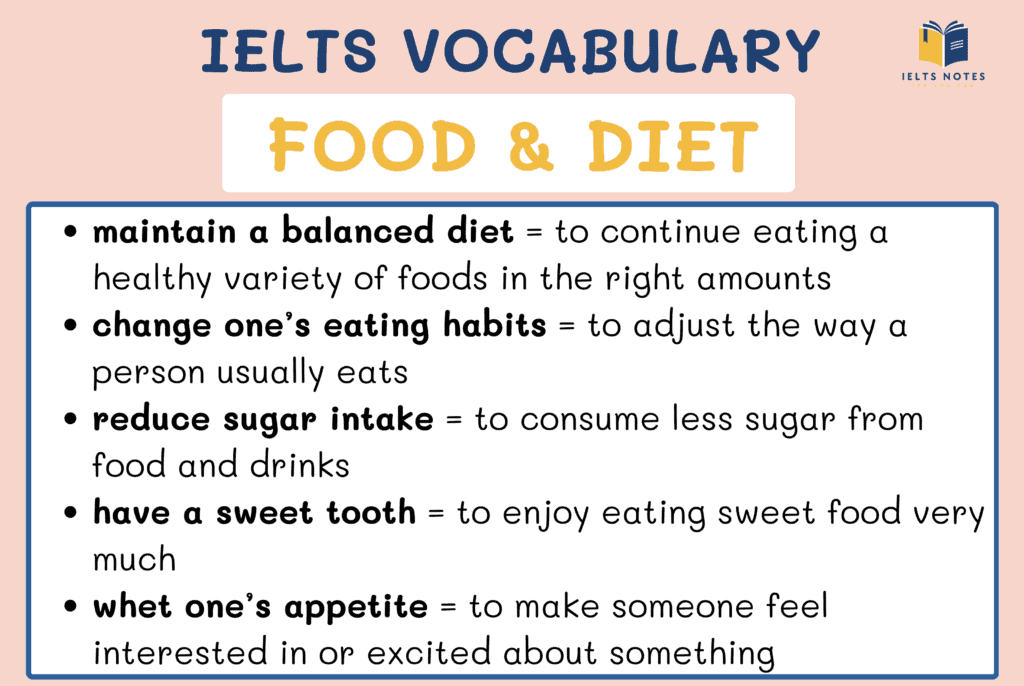
- have a sweet tooth = to enjoy eating sweet food very much
- be a picky eater = to be someone who is selective and does not like many types of food
- share meals with family = to eat together with family members as a social or bonding activity
- have regular meals = to eat meals at consistent times each day
- skip breakfast = to not eat breakfast, often because of a busy schedule or poor eating habits
- snack between meals = to eat small amounts of food between breakfast, lunch, and dinner
- rely on takeaway food = to often depend on food ordered from restaurants instead of cooking
- eat on the go = to eat while travelling, working, or moving from one place to another
- mindful eating = the habit of paying attention to what, when, and how much one eats
- portion control = the practice of eating a suitable amount of food rather than too much
- meal planning = the practice of planning meals in advance to save time, money, or improve health
- food preparation = the process of getting ingredients and meals ready before eating or cooking
- cooking routine = a regular pattern or habit related to preparing meals
- eating routine = the regular pattern of when, where, and how a person eats
- family dining = the habit of family members eating together, often at home
- social dining = eating with other people as a way to socialise or build relationships
- convenience-driven eating = eating habits based mainly on speed and convenience rather than nutrition
- make healthier food choices = to choose food that is better for one’s health
- reduce dependence on fast food = to eat less fast food and rely more on healthier or home-prepared meals
Read more
Food Culture & Traditional Food Vocabulary
- food culture = the customs, habits, and beliefs related to food in a particular society or community
- traditional cuisine = the cooking style and dishes that are typical of a country, region, or culture
- local cuisine = the food and cooking style that are typical of a particular area or community
- regional cuisine = the dishes and cooking traditions associated with a specific region
- traditional dish = a dish that has been eaten and valued in a culture for a long time
- signature dish = the most famous or representative dish of a restaurant, region, or culture
- local specialty = a food or dish that a particular place is well known for
- regional delicacy = a special and often high-quality food that is strongly associated with a particular region
- staple dish = a basic dish that people in a country or community eat regularly
- street food = ready-to-eat food sold by vendors in public places such as streets, markets, or food stalls
- street food culture = the tradition and lifestyle connected with eating food sold in public places
- food stall = a small stand or shop where food is cooked and sold, often in markets or on streets
- family recipe = a recipe that is used, kept, or passed down within a family
- culinary tradition = long-established cooking practices, dishes, and food customs in a culture
- culinary heritage = the traditional food, recipes, and cooking methods that are inherited from previous generations
- traditional cooking methods = old or long-established ways of preparing food, often linked to culture and family life
- festive meal = a special meal prepared and eaten during a festival, celebration, or important occasion
- communal dining = the practice of eating together as a group, often to strengthen social bonds
- shared meal = a meal eaten together with other people, often creating connection and a sense of belonging
- dining etiquette = the accepted rules or manners people follow when eating in a particular culture
- food customs = traditional habits and practices related to preparing, serving, and eating food
- cultural identity = the sense of belonging to a culture, often shown through language, traditions, food, and lifestyle
- cultural significance = the importance something has within a particular culture or society
- authentic local food = food that is prepared in a traditional way and reflects the real taste of a place
- preserve culinary traditions = to protect and continue traditional food practices over time
- pass down recipes = to transfer recipes from older generations to younger ones
- reflect cultural identity = to show the values, history, or traditions of a particular culture
- bring people together = to help people connect and build relationships through a shared activity, such as eating
- fusion cuisine = a style of cooking that combines ingredients or techniques from different cultures
- culinary diversity = the variety of food traditions, cooking styles, and dishes found across different cultures
- global food trends = popular eating habits or food styles that spread across countries and cultures
- lose traditional food values = to gradually stop respecting or maintaining the cultural meaning of traditional food
- keep traditional recipes alive = to continue using and sharing old recipes so they do not disappear
Food & Diet-related Collocations
- maintain a balanced diet = to continue eating a healthy variety of foods in the right amounts
- follow a strict diet = to eat according to specific rules, often for health, weight, or medical reasons
- adopt a healthier diet = to start eating in a way that is better for one’s health
- improve one’s diet = to make better food choices and eat more nutritious food
- have a poor diet = to regularly eat food that is unhealthy or lacks important nutrients
- change one’s eating habits = to adjust the way a person usually eats
- develop healthy eating habits = to form regular ways of eating that support good health
- make healthier food choices = to choose food that is more nutritious and beneficial for health
- reduce sugar intake = to consume less sugar from food and drinks
- cut down on processed food = to reduce the amount of processed food one eats
- avoid junk food = to try not to eat food that is high in fat, sugar, or salt and low in nutrients
- consume fast food regularly = to eat fast food often as part of one’s normal routine
- rely on convenience food = to depend on quick and easy food rather than fresh or home-cooked meals
- prepare home-cooked meals = to cook meals at home instead of buying ready-made or restaurant food
- eat fresh produce = to eat fresh fruits and vegetables
- increase fruit and vegetable intake = to eat more fruits and vegetables as part of a daily diet
- control portion sizes = to manage the amount of food eaten in each meal
- monitor calorie intake = to pay attention to the number of calories consumed
- meet nutritional needs = to provide the body with the nutrients it needs to function properly
- provide essential nutrients = to supply important substances such as vitamins, minerals, protein, and fibre
- support digestive health = to help the digestive system work properly
- boost the immune system = to strengthen the body’s ability to fight illness
- promote overall well-being = to support a person’s general health, comfort, and quality of life
- lead to weight gain = to cause an increase in body weight over time
- contribute to obesity = to be one of the factors that causes serious weight-related health problems
- increase the risk of chronic diseases = to make long-term health conditions such as diabetes or heart disease more likely
- cause long-term health problems = to lead to health issues that may last for many years
- raise public awareness about nutrition = to help people understand the importance of healthy eating
- encourage healthier lifestyles = to motivate people to live in a way that supports better health
- promote food education = to support teaching people about nutrition and healthy dietary choices
- regulate fast food advertising = to control how fast food is advertised, especially to children
- provide nutritional information = to give details about the nutrients, calories, or ingredients in food
- preserve traditional eating habits = to maintain long-established ways of eating within a culture
- reflect cultural identity = to show the values, history, and traditions of a particular culture through food
- strike a balance between taste and nutrition = to choose food that is both enjoyable and healthy
Idioms & Natural Expressions about Food
- have a sweet tooth = to enjoy eating sweet food very much
- be a picky eater = to be selective about food and dislike many types of food
- grab a bite = to eat something quickly, especially when someone does not have much time
- comfort food = food that makes someone feel relaxed, happy, or emotionally comforted
- an acquired taste = a food or drink that people may not like at first, but gradually start to enjoy
- not my cup of tea = not something that someone likes or enjoys
- food for thought = an idea or issue that makes people think carefully
- a recipe for disaster = a situation or combination of factors that is likely to cause serious problems
- the icing on the cake = an extra good thing that makes an already positive situation even better
- bring something to the table = to contribute something useful, valuable, or important
- spice things up = to make something more interesting, exciting, or varied
- whet one’s appetite = to make someone feel interested in or excited about something
- leave a bad taste in someone’s mouth = to create an unpleasant feeling or negative impression
- a feast for the senses = something that is very enjoyable to see, smell, taste, hear, or experience
- bursting with flavour = having a very strong, rich, and pleasant taste
- packed with flavour = full of strong and enjoyable taste
- rich in flavour = having a deep, strong, and satisfying taste
- full of character = having distinctive and interesting qualities, often used to describe food, places, or traditions
- go-to meal = a meal that someone often chooses because it is familiar, convenient, or reliable
- home-cooked goodness = the warm, comforting quality of food prepared at home
- a taste of home = food that reminds someone of their home, family, or culture
- a taste of tradition = food that reflects long-established cultural or family customs
- bring people together = to help people connect and build relationships through shared experiences, such as eating
- share a meal = to eat together with other people, often as a social or family activity
- try something new = to experience a new type of food, dish, or cuisine for the first time
- expand one’s palate = to become more willing or able to enjoy a wider range of foods and flavours
- develop a taste for something = to gradually begin to like a particular food, drink, or flavour
- fall in love with a dish = to start liking a particular dish very much after trying it
- a memorable dining experience = a meal or eating experience that is special and easy to remember
- turn a simple meal into something special = to make an ordinary meal feel more enjoyable, meaningful, or impressive
Read more
Phrasal Verbs Related to Food & Eating
- eat out = to eat at a restaurant or café instead of eating at home
- cut down on = to reduce the amount of something, especially unhealthy food or drinks
- give up = to stop eating, drinking, or doing something completely
- stay away from = to avoid eating or consuming something, especially for health reasons
- go for = to choose a particular type of food or drink
- pick up = to buy food quickly, especially on the way somewhere
- grab something to eat = to get or eat food quickly when someone is busy
- snack on = to eat small amounts of food between main meals
- fill up on = to eat a lot of one type of food until feeling full
- tuck into = to start eating food eagerly and with enjoyment
- warm up = to heat food before eating it
- heat up = to make cooked food hot again before serving or eating
- use up = to finish all of a particular ingredient or food item
- run out of = to have no more food, drink, or ingredients left
- throw away = to get rid of food that is no longer needed or has gone bad
- go off = to become bad or unsafe to eat, especially food or drink
- live on = to mainly eat a particular type of food regularly
- rely on = to depend on a particular type of food, often because it is convenient
- cook up = to prepare food, especially quickly or casually
- whip up = to prepare a meal quickly and easily
- try out = to test or experience a new recipe, dish, or restaurant
- cut out = to completely remove a type of food from one’s diet
- put on weight = to become heavier, often because of eating habits or lifestyle
- slim down = to lose weight, usually by changing diet or lifestyle
- work off = to use exercise to burn the calories gained from eating
- load up on = to eat or consume a large amount of something
- polish off = to finish all of the food, usually because it tastes good
- come down to = to be mainly caused by or depend on a particular factor
- lead to = to cause a particular result, especially a health problem
- contribute to = to be one of the causes of a problem or situation, such as obesity or poor health
IELTS Speaking Part 1: Topic – Food & Diet
What is your favourite food?
My favourite food at the moment is probably caramel glazed donuts. I have a sweet tooth, so I’m really into desserts that are sweet and rich in flavour. Recently, I’ve been enjoying this donut because the caramel glaze makes it taste really mouth-watering, and it has just the right level of sweetness for me.
Do you often cook at home or eat out?
I usually prefer to prepare meals at home because it’s much more affordable and I can control what I eat. However, I’ve been quite busy recently, so I often order takeaway or buy food outside for convenience.
Do you think you have a healthy diet?
No, not really. I wouldn’t say I have a very healthy diet because I often eat fast food and sweet snacks, especially when I’m busy or stressed. I know these are not great choices in the long run, so I’m trying to develop healthy eating habits.
Useful Vocabulary:
- have a sweet tooth = to enjoy eating sweet food very much
- mouth-watering = extremely attractive or delicious in appearance, smell, or taste
- prepare meals at home = to cook and organise meals at home instead of buying food outside
- order takeaway = to buy cooked food from a restaurant and eat it somewhere else
- fast food = food that is prepared and served quickly, often considered unhealthy when eaten too often
- healthy eating habits = regular ways of eating that help maintain good health and prevent health problems
IELTS Speaking Part 2: Describe a special meal you had
You should say:
- What the meal was
- Who you had it with
- Where you had it
And explain why it was special.
Sample Answer:
I’d like to talk about a very special meal I had with my grandfather before he passed away. It wasn’t an expensive dinner at a restaurant or a fancy celebration, but it was one of the most meaningful meals I have ever had.
The meal was quite simple. We had steak and mashed potatoes, which were some of my grandfather’s favourite foods. The steak was really tender, and the mashed potatoes were soft and creamy, but what made the meal special was not really the food itself. It was the fact that it was a shared meal with someone who meant a lot to me.
I had it with my grandfather at his house. The atmosphere was quiet and warm, and we spent the evening talking about many things, from family memories to small stories from his younger years. At that time, I didn’t fully realise that it would be the last meal I would have with him, so looking back, every detail feels much more precious now.
What made this meal truly special was the emotional connection behind it. The food was simple, but it felt like comfort food because it reminded me of home, family, and the time we spent together. In a way, that dinner became a taste of home for me, something I can still remember clearly whenever I think about him.
I was 21 when he passed away, and that meal has stayed in my memory ever since. It taught me that food is not only about taste or ingredients. Sometimes, a meal can bring people together and become a powerful reminder of love, family, and the people we care about.
Overall, I would say it was a memorable dining experience, not because the food was extraordinary, but because it was the last quiet, meaningful moment I shared with my grandfather.
Useful Vocabulary:
- tender = soft and easy to chew, especially used to describe meat or cooked vegetables
- creamy = smooth, thick, and soft in texture, often used to describe sauces, soups, or desserts
- shared meal = a meal eaten together with other people, often creating connection and a sense of belonging
- comfort food = food that makes someone feel relaxed, happy, or emotionally comforted
- a taste of home = food that reminds someone of their home, family, or culture
- bring people together = to help people connect and build relationships through shared experiences such as eating
- memorable dining experience = a meal or eating experience that is special and easy to remember
Read more
IELTS Speaking Part 3: Topic – Food & Diet
Do you think people’s eating habits have changed in recent years?
Yes, definitely. I think people’s eating habits have changed quite a lot in recent years, especially because many people are becoming more aware of how food affects their long-term health. In the past, people might have focused more on eating enough or choosing food that was cheap and convenient, but nowadays, many are trying to develop healthy eating habits and pay more attention to what they put into their bodies.
More people are choosing vegetables, fresh ingredients, and lighter meals instead of eating too much processed food. I think this change is partly because people are more concerned about health problems, and partly because there are more worries about food safety, such as chemical residues or contamination in some food sources.
Is it important to have a family meal? What is your opinion?
Yes, I definitely think family meals are important. In my opinion, a shared meal is not just about eating together, but also about creating time for family members to connect, especially in today’s busy world.
Besides, family meals are often linked to home-cooked meals, which can be healthier than eating out or ordering takeaway all the time. They also allow older family members to pass down recipes or share food traditions with younger generations. So overall, I would say having family meals is still very meaningful. It helps people stay connected, maintain family traditions, and create memories through simple everyday moments.
Useful Vocabulary:
- long-term health = a person’s health condition over a long period of time, not just in the present
- healthy eating habits = regular ways of eating that help maintain good health and prevent health problems
- processed food = food that has been changed from its natural state, often with added sugar, salt, fat, or preservatives
- shared meal = a meal eaten together with other people, often creating connection and a sense of belonging
- bring people together = to help people connect and build relationships through shared experiences such as eating
- home-cooked meals = meals that are prepared at home, often seen as healthier and more personal
- pass down recipes = to transfer recipes from older generations to younger ones
- family traditions = customs or habits that are continued within a family over time