

In this article, IELTS Notes will introduce useful IELTS Tourism vocabulary words and phrases, along with collocations, idioms, phrasal verbs, and sample answers to help you use them effectively in both IELTS Speaking and IELTS Writing.
IELTS Tourism Vocabulary by Topics
General Tourism Vocabulary
- tourism = the activity or industry of people travelling to places for leisure, culture, business, or other purposes
- tourist = a person who travels to a place for pleasure, sightseeing, or cultural experiences
- traveller = a person who travels from one place to another, often for experience, exploration, or personal interest
- visitor = a person who goes to a place temporarily, either for tourism, business, or personal reasons
- destination = a place where people travel to or plan to visit
- tourist destination = a place that attracts visitors because of its beauty, culture, history, or entertainment value
- tourist attraction = a place or activity that draws visitors because it is interesting, famous, or enjoyable
- sightseeing = the activity of visiting interesting places, especially while travelling
- travel experience = the overall experience a person has while visiting or exploring a place
- itinerary = a planned schedule or route for a trip, including places to visit and activities to do
- guided tour = a trip or visit led by a guide who explains the history, culture, or features of a place
- package tour = a holiday arranged by a travel company, usually including transport, accommodation, and activities
- travel agency = a business that helps people plan and book trips, hotels, flights, or tours
- local guide = a person from a particular area who helps tourists understand and explore the place
- accommodation = a place where travellers stay, such as a hotel, hostel, resort, or homestay
- hospitality industry = the industry that provides services for travellers, including hotels, restaurants, and tourism-related businesses
- peak season = the busiest time of year for tourism, when many people travel to a destination
- off-season = the period when fewer tourists visit a place, often resulting in lower prices and quieter attractions
- tourist hotspot = a very popular place that attracts a large number of tourists
- holidaymaker = a person who is travelling or staying somewhere for a holiday
- tourism industry = the business sector related to travel, accommodation, attractions, and services for tourists
- tourism revenue = the money earned from tourism activities, such as hotels, tours, transport, and attractions
- tourist facilities = services and places provided for tourists, such as hotels, restaurants, information centres, and transport
- tourist infrastructure = the basic systems and facilities that support tourism, such as airports, roads, hotels, and public transport
- travel demand = the desire or need for people to travel to a particular place
- tourist influx = the arrival of a large number of tourists in a particular place
- travel restrictions = official rules that limit or control people’s ability to travel
- tourist information centre = a place where travellers can get maps, advice, and information about local attractions
- travel arrangements = plans and bookings made before a trip, such as flights, hotels, and transport
- memorable trip = a journey or holiday that is special and easy to remember
- leisure travel = travel for relaxation, enjoyment, or personal pleasure rather than work
- business travel = travel related to work, meetings, conferences, or professional purposes
- travel destination appeal = the qualities that make a place attractive to visitors
- tourist experience = the overall impression and satisfaction a tourist has during a visit
Types of Tourism Vocabulary
- domestic tourism = tourism that involves people travelling within their own country
- international tourism = tourism that involves people travelling to another country for leisure, business, or cultural experiences
- inbound tourism = tourism involving foreign visitors coming into a country
- outbound tourism = tourism involving residents of one country travelling to another country
- mass tourism = tourism that involves large numbers of people visiting the same destination, often at the same time
- sustainable tourism = tourism that aims to reduce negative impacts on the environment, local culture, and communities
- eco-tourism = tourism that focuses on visiting natural areas while protecting the environment and supporting local communities
- responsible tourism = tourism that encourages travellers to behave respectfully towards local people, culture, and the environment
- cultural tourism = tourism that focuses on experiencing the culture, traditions, history, and lifestyle of a place
- heritage tourism = tourism based on visiting historical sites, cultural landmarks, and places of historical importance
- community-based tourism = tourism that directly involves and benefits local communities
- adventure tourism = tourism that involves exciting or physically challenging activities such as hiking, climbing, or diving
- nature-based tourism = tourism that focuses on natural attractions such as forests, mountains, beaches, or national parks
- wildlife tourism = tourism that involves observing animals in their natural habitats
- rural tourism = tourism that takes place in countryside areas and allows visitors to experience rural life
- urban tourism = tourism that focuses on visiting cities and enjoying urban attractions, culture, shopping, and entertainment
- coastal tourism = tourism that takes place in seaside or coastal areas
- beach tourism = tourism centred around beaches, seaside resorts, swimming, and relaxation by the sea
- culinary tourism = tourism that focuses on experiencing local food, traditional dishes, and regional cuisine
- medical tourism = tourism that involves travelling to another place or country to receive medical treatment
- wellness tourism = tourism focused on improving physical and mental well-being through activities such as spa treatments, yoga, or relaxation
- business tourism = tourism related to work, meetings, conferences, exhibitions, or professional events
- educational tourism = tourism that involves travelling to learn something, such as a language, culture, subject, or skill
- religious tourism = tourism that involves visiting religious sites or travelling for spiritual purposes
- luxury tourism = tourism that focuses on high-end travel experiences, expensive accommodation, and premium services
- budget tourism = tourism that involves travelling with limited spending and choosing affordable transport, food, and accommodation
- backpacking tourism = low-cost independent travel, often involving simple accommodation and flexible travel plans
- volunteer tourism = tourism that combines travel with voluntary work, often in local communities or environmental projects
- festival tourism = tourism that involves travelling to attend cultural, music, religious, or traditional festivals
- slow tourism = tourism that encourages travellers to spend more time in one place and experience local life more deeply
Read more
Tourist Attractions & Destinations Vocabulary
- tourist attraction = a place or activity that attracts visitors because it is interesting, enjoyable, famous, or culturally significant
- tourist destination = a place that people travel to for leisure, sightseeing, culture, or relaxation
- landmark = a famous building, structure, or place that is easily recognised and often represents a city or country
- iconic landmark = a very famous and easily recognised landmark that strongly represents a place
- historical site = a place that is important because of its connection with past events, people, or periods
- heritage site = a place that is valued and protected because of its historical, cultural, or natural importance
- UNESCO World Heritage Site = a place officially recognised by UNESCO for its outstanding cultural, historical, or natural value
- cultural site = a place connected with the traditions, beliefs, art, or history of a particular society
- religious site = a place that has religious importance, such as a temple, church, mosque, or shrine
- architectural masterpiece = a building or structure that is admired for its excellent design and artistic value
- well-preserved site = a place that has been carefully maintained so that its original condition, character, or historical value remains
- ancient town = an old town with historical buildings, traditional streets, and cultural value
- old quarter = the historic part of a city, usually known for traditional buildings, narrow streets, and local culture
- local market = a place where local people buy and sell food, goods, or traditional products
- night market = a market that opens in the evening, often popular with tourists for food, shopping, and local culture
- museum = a place where objects related to history, art, science, or culture are collected and displayed
- art gallery = a place where works of art are displayed for visitors to view
- theme park = a large entertainment area with rides, shows, and attractions based on particular themes
- national park = a protected natural area where people can enjoy landscapes, wildlife, and outdoor activities
- natural wonder = an impressive natural feature that attracts visitors because of its beauty or uniqueness
- scenic spot = a place that is attractive because of its beautiful natural views
- picturesque landscape = a landscape that is visually attractive and looks suitable for a picture or photograph
- breathtaking view = an extremely beautiful or impressive view
- panoramic view = a wide and open view of a large area, often seen from a high place
- coastal area = a region located near the sea, often popular for beaches, seafood, and seaside activities
- mountain resort = a holiday destination in a mountain area, often offering relaxation, nature, and outdoor activities
- tourist hotspot = a very popular place that attracts a large number of tourists
- hidden gem = a beautiful or interesting place that is not widely known by tourists
- must-see attraction = a place that is considered very important or worthwhile for visitors to see
- off-the-beaten-track destination = a place that is not visited by many tourists and feels less commercial or crowded
- overcrowded attraction = a tourist site that has too many visitors, often causing discomfort or pressure on local facilities
- tourist trap = a place that attracts tourists but is often overpriced, crowded, or less authentic than expected
- destination appeal = the qualities that make a place attractive to tourists
- cultural landmark = a place or structure that represents the culture, history, or identity of a community
- natural landscape = the visible features of a natural area, such as mountains, rivers, forests, or beaches
- scenic route = a road or path that is popular because it offers beautiful views along the way
Travel Experience & Activities Vocabulary
- travel experience = the overall experience a person has while visiting, exploring, or staying in a place
- memorable trip = a journey or holiday that is special and easy to remember
- once-in-a-lifetime experience = a very special experience that is unlikely to happen again
- cultural experience = an experience that helps someone understand the traditions, lifestyle, or values of a place
- authentic experience = a real and genuine experience that reflects the true culture or lifestyle of a place
- local experience = an activity or moment that allows visitors to experience how local people live
- go sightseeing = to visit interesting or famous places while travelling
- explore a new place = to visit and learn about a place that one has not been to before
- wander around = to walk around a place slowly and casually without a fixed plan
- take a guided tour = to visit a place with a guide who explains its history, culture, or important features
- visit local attractions = to go to popular or interesting places in a particular area
- try local cuisine = to eat traditional or typical food from a particular place
- sample local dishes = to try small amounts of traditional or regional food while travelling
- experience local culture = to take part in or observe the customs, lifestyle, and traditions of local people
- immerse oneself in local life = to become deeply involved in the everyday lifestyle and culture of a place
- interact with local people = to communicate with people who live in the place being visited
- learn about local customs = to understand the traditional habits, rules, and behaviours of a local community
- discover new cultures = to learn about different ways of life, traditions, and values through travel
- broaden one’s horizons = to expand one’s knowledge, experience, and understanding of the world
- gain a deeper understanding = to develop a more meaningful and detailed knowledge of a place, culture, or issue
- create lasting memories = to have experiences that remain in one’s memory for a long time
- enjoy the scenery = to appreciate the natural views and surroundings of a place
- take in the view = to spend time looking at and appreciating a beautiful scene
- admire the landscape = to enjoy and appreciate the natural features of a place, such as mountains, rivers, or beaches
- go hiking = to walk for a long distance in nature, especially in mountains, forests, or countryside areas
- go camping = to stay outdoors in a tent or temporary shelter, usually as a leisure activity
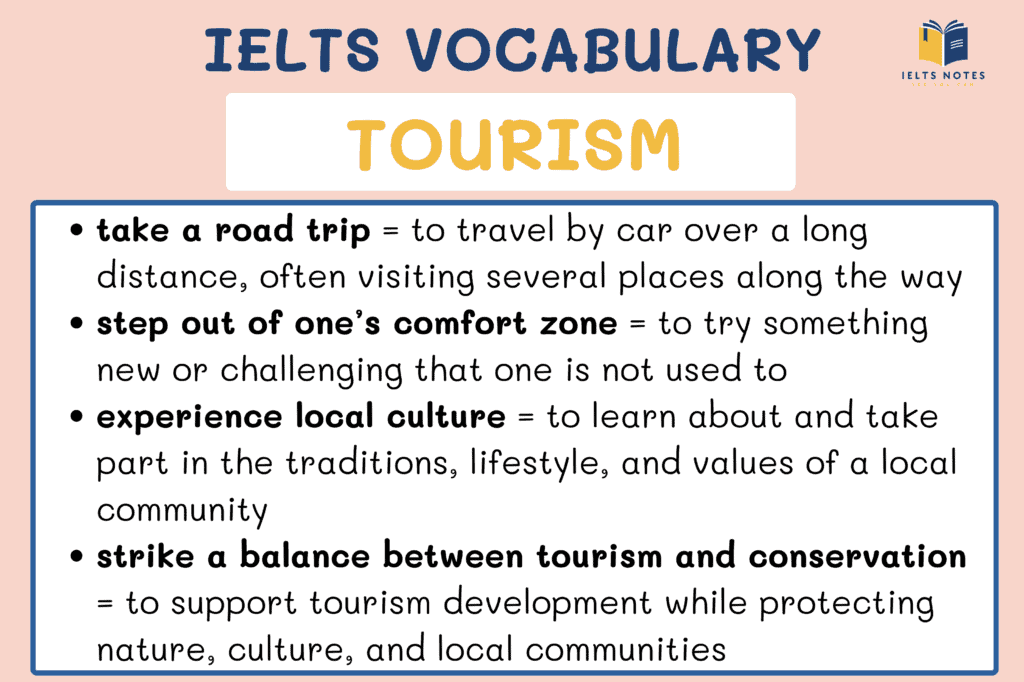
- take a road trip = to travel by car over a long distance, often visiting several places along the way
- relax on the beach = to spend time resting or enjoying oneself by the sea
- join outdoor activities = to take part in activities done outside, such as hiking, cycling, swimming, or camping
- visit historical sites = to go to places that are important because of their connection with the past
- attend local festivals = to take part in cultural, religious, or traditional events in a particular area
- soak up the atmosphere = to fully enjoy and experience the mood, feeling, or character of a place
- step out of one’s comfort zone = to try something new or challenging that one is not used to
- escape from daily routine = to take a break from normal work, study, or everyday responsibilities
- recharge one’s batteries = to rest and recover energy after a busy or stressful period
- have a change of scenery = to go somewhere different in order to feel refreshed or inspired
Read more
Accommodation & Transport Vocabulary
- accommodation = a place where travellers stay during a trip, such as a hotel, hostel, resort, or homestay
- budget accommodation = affordable places to stay, often chosen by travellers who want to save money
- luxury accommodation = high-end places to stay that offer premium services, comfort, and facilities
- hotel = a building that provides rooms, meals, and services for travellers or tourists
- hostel = a low-cost type of accommodation where travellers often share rooms and facilities
- resort = a holiday place that provides accommodation, food, entertainment, and leisure facilities
- homestay = accommodation where visitors stay with a local family and experience local life
- guesthouse = a small and usually affordable place that provides rooms for travellers
- all-inclusive resort = a resort where accommodation, meals, drinks, and some activities are included in one price
- short-term rental = accommodation rented for a short period of time, often through online platforms
- room service = a hotel service that allows guests to order food or drinks to their room
- hotel facilities = services and spaces provided by a hotel, such as restaurants, gyms, swimming pools, and conference rooms
- check-in process = the procedure of registering at a hotel, airport, or other travel service before using it
- check-out time = the time by which guests must leave their accommodation
- booking confirmation = a message or document that proves a reservation has been made
- travel documents = official documents needed for travel, such as passports, visas, tickets, or booking confirmations
- travel insurance = insurance that helps cover unexpected problems during a trip, such as illness, delays, or lost luggage
- public transport = transport services used by the public, such as buses, trains, subways, or trams
- transport system = the network of transport options and services available in a place
- tourist transport = transport services designed or commonly used by tourists to reach attractions and destinations
- airport transfer = transport arranged to take travellers between the airport and their accommodation
- domestic flight = a flight that travels within the same country
- international flight = a flight that travels from one country to another
- long-haul flight = a flight that covers a long distance and usually takes many hours
- connecting flight = a flight that passengers take after another flight to reach their final destination
- train journey = a trip made by train, often used to describe travel between cities or regions
- road trip = a journey made by car, usually over a long distance and often for leisure
- car rental = the service of hiring a car for a short period while travelling
- ride-hailing service = a transport service that allows people to book a car or motorbike through a mobile app
- travel route = the path or direction taken when travelling from one place to another
- commuting time = the amount of time spent travelling between places, often between accommodation and attractions
- transport accessibility = how easy it is for people to reach a place using available transport options
- well-connected area = an area that has convenient transport links to other places
- traffic congestion = a situation where roads are crowded with vehicles and movement becomes slow
- travel expenses = the money spent on transport, accommodation, food, and other costs during a trip
- travel budget = the amount of money planned or available for a trip
- affordable transport = transport that is reasonably priced and suitable for travellers with different budgets
- convenient location = a place that is easy to reach and close to important facilities or attractions
- tourist-friendly facilities = services and facilities that make travelling easier and more comfortable for tourists
- comfortable stay = an experience of staying somewhere that is pleasant, convenient, and relaxing
Tourism and Economy Vocabulary
- local economy = the economy of a particular area, town, city, or region
- economic growth = an increase in the production, income, and overall financial activity of a country or region
- tourism industry = the business sector that includes travel, accommodation, attractions, transport, and services for tourists
- hospitality industry = the industry that provides services such as hotels, restaurants, resorts, and guest services
- tourism revenue = the money earned from tourism-related activities, such as hotels, tours, transport, and attractions
- source of income = a way of earning money for individuals, businesses, or communities
- foreign currency = money from other countries that tourists bring into a destination through spending
- foreign exchange earnings = income a country receives in foreign currency from international visitors
- job opportunities = chances for people to find work or employment
- employment opportunities = available jobs or work created by a particular industry or activity
- seasonal employment = temporary work that is available only during certain times of the year, especially peak tourism seasons
- local businesses = businesses owned or operated by people in a local area, such as restaurants, shops, hotels, or tour services
- small and medium-sized enterprises = businesses that are smaller than large corporations but play an important role in the economy
- tourism-related businesses = businesses that directly or indirectly serve tourists, such as hotels, restaurants, souvenir shops, and transport providers
- economic development = the process of improving a country’s or region’s economy and living standards
- infrastructure development = the improvement of basic systems and facilities such as roads, airports, public transport, and utilities
- public investment = money spent by the government on services, facilities, or infrastructure
- private investment = money spent by individuals or companies to develop businesses or services
- tourism investment = money used to develop tourism facilities, attractions, accommodation, or infrastructure
- local employment = jobs created for people who live in a particular area
- income generation = the process of creating money or earnings for individuals, businesses, or communities
- boost economic growth = to help the economy grow faster or become stronger
- generate tourism revenue = to create income from tourism activities and services
- create jobs = to provide new employment opportunities for people
- support local businesses = to help businesses in a local area grow or survive
- attract investment = to encourage individuals, companies, or governments to spend money on development
- stimulate the economy = to encourage economic activity and financial growth
- contribute to the economy = to have a positive effect on a country’s or region’s financial development
- increase government revenue = to raise the amount of money the government receives, often through taxes and tourism-related fees
- improve living standards = to make people’s quality of life better through higher income, better services, or improved facilities
- economic benefits = the financial advantages that an activity or industry brings
- economic dependence = a situation in which a place relies heavily on one industry or source of income
- overdependence on tourism = relying too much on tourism as the main source of income or economic growth
- economic vulnerability = the risk of being negatively affected by economic changes, crises, or external shocks
- economic leakage = the loss of tourism income when money leaves the local economy instead of staying in the destination
- tourism multiplier effect = the wider economic impact created when tourist spending benefits different businesses and workers in the local economy
- cost of living = the amount of money people need to pay for basic expenses such as housing, food, transport, and services
- rising living costs = an increase in the amount of money needed to afford daily life
- property prices = the cost of buying or renting land, houses, or buildings
- commercial development = the growth of businesses, shops, hotels, and other profit-making facilities in an area
- economic inequality = the gap between people or groups with different levels of income, wealth, or economic opportunity
Environmental Impact of Tourism Vocabulary
- environmental impact = the effect that tourism or human activities have on the natural environment
- carbon footprint = the amount of carbon dioxide and other greenhouse gases produced by a person, activity, or industry
- ecological footprint = the impact of human activities on natural resources and ecosystems
- carbon emissions = gases released into the atmosphere, especially from transport, flights, and energy use
- air pollution = the contamination of the air caused by harmful gases, smoke, or chemicals
- water pollution = the contamination of rivers, lakes, seas, or groundwater caused by waste or harmful substances
- noise pollution = unwanted or harmful noise that affects people, animals, or the natural environment
- marine pollution = pollution that affects seas and oceans, often caused by plastic waste, sewage, or tourist activities
- waste generation = the production of rubbish or unwanted materials as a result of human activities
- tourist waste = rubbish produced by tourists, such as plastic bottles, food packaging, or disposable items
- littering = the act of leaving rubbish in public places or natural areas instead of disposing of it properly
- plastic waste = discarded plastic materials that can damage the environment and harm wildlife
- waste management = the process of collecting, treating, recycling, or disposing of waste properly
- overcrowding = a situation where too many tourists visit the same place, causing pressure on local facilities and the environment
- overtourism = excessive tourism that harms local communities, natural areas, or cultural sites
- overdevelopment = excessive construction of hotels, resorts, roads, or tourist facilities that damages the environment
- habitat destruction = the damage or loss of natural places where plants and animals live
- damage to natural habitats = harm caused to forests, beaches, mountains, coral reefs, or other natural environments
- wildlife disturbance = disruption caused to animals by human activity, noise, construction, or tourism
- biodiversity loss = the decline or disappearance of different species of plants and animals in an area
- environmental degradation = the worsening of the natural environment due to pollution, overuse, or human activity
- fragile ecosystem = an ecosystem that can be easily damaged by human activity or environmental changes
- natural resources = materials or features from nature, such as water, forests, land, minerals, and wildlife
- resource depletion = the reduction or exhaustion of natural resources because they are used too much
- excessive water consumption = the use of too much water, often by hotels, resorts, or tourist facilities
- soil erosion = the gradual loss of soil, often caused by construction, deforestation, or heavy tourist activity
- deforestation = the cutting down or clearing of forests, often for construction, farming, or development
- conservation = the protection of nature, wildlife, and natural resources from damage or loss
- nature conservation = the protection and careful management of natural areas, plants, and animals
- environmental protection = actions taken to prevent damage to the natural environment
- protected area = a natural place that is officially protected because of its environmental, cultural, or scientific value
- national park conservation = the protection and management of national parks to preserve wildlife and natural landscapes
- sustainable tourism = tourism that aims to reduce negative impacts on the environment, local culture, and communities
- eco-friendly tourism practices = tourism activities that are designed to cause less harm to the environment
- responsible tourism = tourism that encourages travellers and businesses to respect local communities, culture, and the environment
- green tourism = tourism that focuses on environmentally friendly travel choices and sustainable practices
- low-impact tourism = tourism that causes minimal damage to the environment and local communities
- carrying capacity = the maximum number of visitors a place can support without serious environmental or social damage
- reduce environmental damage = to make the negative effects on the environment less serious
- mitigate the impact of tourism = to reduce or control the harmful effects caused by tourism
- preserve natural landscapes = to protect natural scenery such as mountains, forests, rivers, and beaches
- protect local ecosystems = to prevent damage to the plants, animals, and natural systems in a particular area
- promote sustainable travel = to encourage people to travel in ways that are less harmful to the environment
Read more
Problems of Tourism Vocabulary
- overtourism = a situation where too many tourists visit a place, causing harm to the environment, local communities, or cultural sites
- mass tourism = tourism involving large numbers of people visiting the same destination, often leading to overcrowding and environmental pressure
- overcrowded destinations = places that receive too many visitors, making them uncomfortable for both tourists and local residents
- tourist overcrowding = the problem of having too many tourists in one place at the same time
- seasonal tourism = tourism that is concentrated during certain times of the year, often creating pressure during peak seasons
- tourist influx = the sudden or large arrival of tourists in a particular place
- pressure on local infrastructure = stress placed on roads, transport, public services, and facilities because of large numbers of visitors
- strained public services = public services that become less effective because too many people use them
- traffic congestion = a situation in which roads are crowded with vehicles and movement becomes slow
- rising living costs = an increase in the cost of daily necessities such as housing, food, transport, and services
- increased property prices = a rise in the cost of buying or renting property, often caused by tourism development
- commercialisation = the process of turning something cultural, natural, or traditional into a product mainly for profit
- cultural commercialisation = the use of local culture, traditions, or customs mainly to attract tourists and make money
- cultural erosion = the gradual loss or weakening of traditional values, customs, or ways of life
- loss of authenticity = the situation in which a place or culture no longer feels genuine because it has been changed for tourists
- tourist trap = a place that attracts tourists but is often overpriced, crowded, or less authentic than expected
- exploitation of local culture = the unfair or excessive use of local traditions, customs, or heritage for tourism profit
- damage to historical sites = physical harm caused to old buildings, monuments, or heritage places by visitors or poor management
- wear and tear = gradual damage caused by repeated use, especially in busy tourist sites
- environmental damage = harm caused to the natural environment by human activities, including tourism
- waste accumulation = the build-up of rubbish in an area, often caused by poor waste management and high visitor numbers
- littering = the act of leaving rubbish in public or natural places instead of disposing of it properly
- noise pollution = unwanted or disturbing noise that affects local residents, wildlife, or the peaceful atmosphere of a destination
- water shortage = a lack of enough water for local people, businesses, or tourist facilities
- resource depletion = the reduction of natural resources because they are used too much or too quickly
- habitat destruction = the damage or loss of natural places where plants and animals live
- wildlife disturbance = disruption caused to animals by tourists, noise, vehicles, or tourism activities
- overdevelopment = excessive construction of hotels, resorts, roads, or tourist facilities that damages the environment or local character
- urban sprawl = the uncontrolled expansion of buildings and roads into natural or rural areas
- displacement of local residents = the situation in which local people are forced to move because of rising costs or tourism development
- unequal distribution of benefits = a situation where the profits from tourism mainly go to large companies instead of local communities
- economic leakage = the loss of tourism income when money leaves the local economy rather than benefiting local people
- overdependence on tourism = relying too heavily on tourism as the main source of income or employment
- economic vulnerability = the risk of being seriously affected by changes in tourism demand, crises, or global events
- seasonal unemployment = unemployment that happens when tourism jobs are only available during certain times of the year
- low-paid tourism jobs = jobs in the tourism sector that offer low wages and limited career development
- irresponsible tourism = tourism that harms local communities, culture, or the environment because visitors or businesses act carelessly
- irresponsible tourists = tourists who behave in ways that disrespect local people, culture, rules, or the environment
- social tension = conflict or discomfort between local residents and tourists, often caused by overcrowding, noise, or cultural differences
- loss of local identity = the weakening of a place’s unique culture, traditions, or character because of tourism pressure
- negative effects of tourism = the harmful social, economic, cultural, or environmental results caused by tourism
- put pressure on local communities = to create stress or difficulties for people living in a tourist destination
- disturb local residents = to negatively affect the daily life, peace, or comfort of people living in a place
- undermine cultural values = to weaken or reduce the importance of traditional beliefs, customs, or ways of life
Tourism-related Collocations
- promote sustainable tourism = to encourage tourism that protects the environment, culture, and local communities
- develop the tourism industry = to improve and expand businesses and services related to tourism
- boost tourism revenue = to increase the money earned from tourism activities
- generate tourism income = to create money from tourism-related services such as hotels, restaurants, transport, and attractions
- attract international tourists = to bring visitors from other countries to a destination
- encourage domestic tourism = to motivate people to travel within their own country
- support local tourism = to help tourism businesses and services in a local area grow
- rely heavily on tourism = to depend strongly on tourism as a main source of income or employment
- benefit from tourism = to gain economic, social, or cultural advantages from tourism
- manage mass tourism = to control large-scale tourism in order to reduce negative impacts
- reduce the negative impact of tourism = to make the harmful effects of tourism less serious
- minimise environmental damage = to reduce harm caused to the natural environment
- protect natural landscapes = to preserve natural scenery such as mountains, forests, beaches, and rivers
- preserve cultural heritage = to protect traditional buildings, customs, values, and historical sites
- protect historical sites = to prevent damage to places that are important because of their history
- promote cultural exchange = to encourage interaction and understanding between people from different cultures
- respect local customs = to behave appropriately according to the traditions and social rules of a place
- experience local culture = to learn about and take part in the traditions, lifestyle, and values of a local community
- strengthen cultural identity = to make a community’s traditions, values, and sense of belonging stronger
- lose cultural authenticity = to become less genuine or traditional, often because of commercial tourism
- attract more visitors = to make a place more appealing so that more people come to visit
- accommodate large numbers of tourists = to provide enough services and facilities for many visitors
- improve tourist facilities = to upgrade services such as hotels, transport, restaurants, and information centres
- enhance the tourist experience = to make a trip more enjoyable, convenient, and memorable for visitors
- meet tourists’ expectations = to provide the quality of service or experience that visitors hope for
- create job opportunities = to provide more chances for people to find work
- support local businesses = to help shops, restaurants, hotels, and service providers in a local area grow
- stimulate the local economy = to increase economic activity in a local area
- contribute to economic growth = to help a country or region become more financially developed
- attract foreign investment = to encourage companies or individuals from other countries to invest money in a destination
- improve local infrastructure = to upgrade roads, airports, public transport, utilities, and other basic facilities
- put pressure on local infrastructure = to create stress on roads, transport, public services, and facilities because of too many visitors
- increase the cost of living = to make everyday expenses such as housing, food, and transport more expensive
- cause environmental degradation = to lead to the worsening of the natural environment
- damage fragile ecosystems = to harm natural systems that are easily affected by human activity
- increase carbon emissions = to produce more greenhouse gases, often through flights, transport, and tourism-related activities
- create waste management problems = to cause difficulties in collecting, treating, or disposing of rubbish properly
- lead to overcrowded destinations = to cause tourist places to become too full of visitors
- damage local communities = to negatively affect the daily life, culture, or comfort of local residents
- disturb local residents = to affect the peace, comfort, or normal routine of people living in a tourist destination
- encourage responsible tourism = to motivate tourists and businesses to act respectfully towards local people, culture, and the environment
- raise awareness of sustainable travel = to help people understand how to travel in a more environmentally and socially responsible way
- strike a balance between tourism and conservation = to support tourism development while protecting nature, culture, and local communities
- balance economic benefits with environmental protection = to gain financial advantages from tourism without causing serious environmental harm
Idioms & Natural Expressions about Travel and Tourism
- broaden one’s horizons = to expand one’s knowledge, experience, and understanding of the world
- a once-in-a-lifetime experience = a very special experience that is unlikely to happen again
- off the beaten track = in or to a place that is not well known or frequently visited by tourists
- a hidden gem = a beautiful or interesting place that is not widely known by many people
- a tourist trap = a place that attracts tourists but is often overpriced, crowded, or not very authentic
- worth a visit = interesting or valuable enough for people to spend time visiting
- a must-see destination = a place that is considered very important or worthwhile for visitors to see
- a change of scenery = a different place or environment that helps someone feel refreshed
- get away from it all = to escape from daily stress, work, or routine by going somewhere different
- recharge one’s batteries = to rest and regain energy after a busy or stressful period
- soak up the atmosphere = to fully enjoy and experience the feeling, mood, or character of a place
- travel light = to travel with very little luggage
- have itchy feet = to have a strong desire to travel or move to new places
- catch the travel bug = to develop a strong interest in travelling after having enjoyable travel experiences
- hit the road = to start a journey or leave for a trip
- live out of a suitcase = to travel frequently and not stay in one place for long
- go the extra mile = to make more effort than expected to make something successful or enjoyable
- take the scenic route = to travel along a longer but more beautiful or interesting route
- a feast for the eyes = something that is extremely beautiful or visually impressive
- picture-perfect = extremely attractive and suitable for being photographed
- breathtaking scenery = extremely beautiful natural views that impress people deeply
- packed with tourists = full of tourists, often to the point of being crowded
- bursting with culture = full of cultural activities, traditions, history, or local identity
- steeped in history = strongly connected with the past and full of historical significance
- rich in culture = having many traditions, customs, arts, and historical values
- full of character = having distinctive, interesting, and memorable qualities
- a window into local life = an experience that allows visitors to understand how local people live
- a taste of local culture = a small but meaningful experience of a place’s traditions, lifestyle, or customs
- step out of one’s comfort zone = to try something new or unfamiliar that may feel challenging at first
- create lasting memories = to have experiences that remain meaningful and memorable for a long time
- make the most of a trip = to use the time during a trip as fully and enjoyably as possible
- travel on a shoestring = to travel with a very small budget
- rough it = to travel or stay somewhere with only basic comfort or facilities
- the trip of a lifetime = an extremely special and memorable journey
- a home away from home = a place where someone feels comfortable and relaxed, even though it is not their own home
- lose oneself in a place = to become completely absorbed in the atmosphere, beauty, or experience of a place
- leave a lasting impression = to affect someone strongly and remain in their memory for a long time
- open one’s eyes to something = to make someone aware of something they had not fully understood before
- a breath of fresh air = something that feels new, refreshing, and different from normal life
- go off the grid = to stay in a place with little or no connection to technology, the internet, or modern facilities
Read more
IELTS Speaking Part 1: Topic – Travel & Tourism
Do you like travelling?
Yes, definitely. I really enjoy travelling, and whenever I have a holiday, I try to visit different tourist destinations. I usually travel to Asian countries like Vietnam, Thailand or Indonesia because they are more affordable destinations compared to places in Europe or America.
Do you like to travel alone or in a group?
To be honest, I’m really interested in travelling alone because I’d love to explore more off-the-beaten-track destinations and have a more authentic local experience. It sounds exciting to wander around at my own pace and discover places that are not too touristy.
When you visit new places, what do you like to do?
When I visit new places, I usually prefer exploring off-the-beaten-track destinations instead of going only to famous tourist spots. I like experiences that show me how local people actually live. I think having a real local experience helps me understand the culture of a country much better.
Useful Vocabulary:
- tourist destinations = places that people travel to for leisure, sightseeing, culture, or relaxation
- affordable destinations = places that are reasonably priced and suitable for travellers with different budgets
- off-the-beaten-track destinations = places that are not visited by many tourists and feel less commercial or crowded
- local experience = an activity or moment that allows visitors to experience how local people live
IELTS Speaking Part 2: Describe a special trip that you plan to go on in the near future
You should say:
- Where this place is
- Who would you like to go with
- What would you do there
And explain why you would like to go there
Sample Answer:
I’d like to talk about a place I plan to visit in the near future, which is the Auschwitz-Birkenau Memorial and Museum in Poland. To be honest, I have travelled quite a lot, so there are many places on my travel list, but this destination feels very different from a normal holiday.
The idea came to me quite unexpectedly. Last year, I spent a lot of time reading books about the Second World War, especially the crimes committed under Hitler’s regime. After reading The Little Liar by Mitch Albom, I became more interested in learning about Auschwitz-Birkenau and the historical context behind it.
I would probably like to go there with a close friend or a family member, because I think it would be quite an emotional and serious travel experience. I don’t see it as a place for entertainment or relaxation. Instead, I would like to visit the museum, walk through the memorial areas, and try to gain a deeper understanding of what happened there and how much damage the war caused to innocent people.
What makes me want to visit this place is its historical significance. I believe travelling should not only be about beautiful scenery or famous attractions. Sometimes, visiting a heritage site can help people reflect on the past and understand human history more seriously. I think Auschwitz-Birkenau would definitely leave a lasting impression on me because it represents one of the darkest periods in modern history.
After that, I would also like to spend some time exploring other parts of Poland or nearby European cities. I might visit Krakow, try some local food, and learn more about the country’s culture. So overall, this trip would not be a typical relaxing holiday, but I think it would be a very meaningful journey and possibly a once-in-a-lifetime experience.
Useful Vocabulary:
- travel experience = the overall experience a person has while visiting, exploring, or staying in a place
- a deeper understanding = a more meaningful and detailed knowledge of a place, culture, or issue
- historical significance = the importance of something because of its connection with history
- heritage site = a place that is valued and protected because of its historical, cultural, or natural importance
- leave a lasting impression = to affect someone strongly and remain in their memory for a long time
- a once-in-a-lifetime experience = a very special experience that is unlikely to happen again
Read more
IELTS Speaking Part 3: Topic – Travel & Tourism
Do you think parents should make a point of taking their children to see a variety of different places? Why or why not?
Yes, definitely. I think parents should take their children to different places whenever they have the chance, because travel can help children broaden their horizons from an early age. When children visit new cities, countries, or cultural sites, they can see that people live in many different ways, not just the way they are used to at home.
I also believe that travelling can teach children to respect local customs and understand cultural differences better. For example, by experiencing different food, traditions, languages, and lifestyles, they may become more open-minded and respectful. So, I do think a variety of travel experiences can help children develop a wider view of the world and become more well-rounded individuals in the future.
How do you think travel will be different in the future?
Wow, I think it’s quite hard to predict exactly how travel will change in the future, but I believe the overall travel experience will become more meaningful and personalised. Instead of only visiting famous attractions, tourists may look for a more authentic experience, where they can understand how local people live and what makes each place unique.
At the same time, I hope tourism will become more responsible. If governments and travel companies focus more on sustainable tourism, people can enjoy travelling while still protecting local communities, culture and the environment.
Useful Vocabulary:
- broaden their horizons = to expand their knowledge, experience, and understanding of the world
- local customs = traditional habits, behaviours, or rules followed by people in a particular place
- travel experiences = the overall experiences people have while visiting, exploring, or staying in different places
- authentic experience = a real and genuine experience that reflects the true culture or lifestyle of a place
- sustainable tourism = tourism that aims to reduce negative impacts on the environment, local culture and communities